
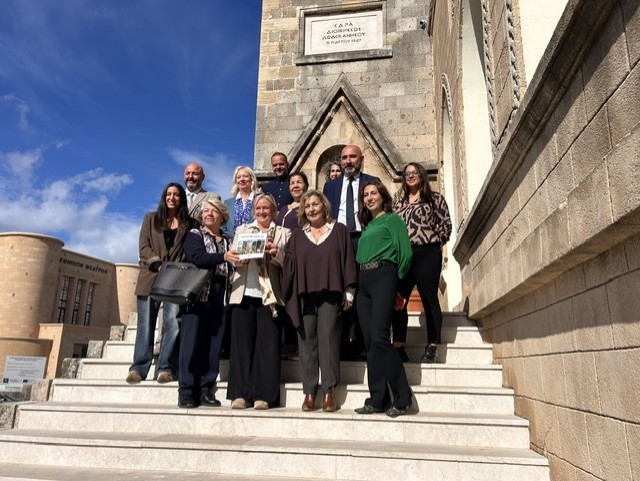
An international jury composed of four Experts accompanied by IGCAT’s President, Diane Dodd PhD, considered the application of the South Region region for the title World Region of Gastronomy 2028. After reviewing the bid book: Archipelago 50 – From Ancient Pride to Future Legacy, submitted on 28 May 2026, they took part in a Jury Visit to the region from 7-13 November 2026. The aim of the visit was to assess the region’s appropriateness and readiness to host the title in 2028 and to prepare a comprehensive report to be sent to the stakeholders within two weeks.
During this week, the jury engaged with more than 130 stakeholders who are committed in supporting the vision for the South Aegean to be known as a destination of excellence in gastronomy, sustainability, cultural heritage, education and economic resilience.
Following this press announcement, the jury will prepare a comprehensive report with recommendations to support South Aegean’s continued development and international positioning.
General comments
Dr. Diane Dodd, President of the International Institute of Gastronomy, Culture, Arts and Tourism (IGCAT), began by introducing the World Region of Gastronomy Award that recognises regions integrating food as a pilar for sustainable development, and encourage collaboration among public authorities, businesses, education and civil society – locally, nationally and internationally, through the global Platform.
Dr. Dodd extended her appreciation to the South Aegean’s World Region of Gastronomy 2028 Consortium, with particular recognition of the leadership of Governor George Hatzimarkos, Region of the South Aegean, and the Chambers of Commerce of Cyclades and Dodecanese.
Dr. Dodd then invited the jury to share their impressions, starting with Dr. Edith M Szivas, reporting on Innovation, Creativity, Tourism and Job Opportunities, who underlined:
•The cooking experience at Nicoleta’s Garden, demonstrated how fresh, seasonal ingredients from the garden can be transformed into traditional dishes, helping visitors connect with the island’s food heritage;
•Messarea Winery, combined local grape varieties with contemporary winemaking and visitor experiences, while the pairing with cheeses from Mantalena dairy, showcased how producers can work together to give visitors a fuller understanding of the region’s food culture;
•The tour and food pairing at NISSOS Brewery, on Tinos, and the presentation of craft dsitilation at Makryonitis Distillery, on Syros, illustrate different ways to build distinctive businesses around local identity, innovation and specialist knowledge;
•The Hermoupolis Textile Museum, demonstrates how industrial heritage can be brought to life through cultural activities and gastronomic experiences. Its use as a venue for food and wine events highlights opportunities for collaboration between heritage organisations and creative tourism and hospitality businesses;
•The Rhodes Co-Lab and the Field to Fork initiatives address the connection between local supply and sustainable tourism. The activities of the Rhodes and Kos hoteliers, the Aegean Winemakers, the Chef’s Club of the Cyclades and Dodecanese, and Aegean Cuisine label create multiple purchasing and collaboration opportunities between producers and hospitality businesses;
•
The School of Higher Vocational Training of Rhodes, the Aegean Skills initiative and the work of KETAN (Cycladic Development Company), bring education, vocational skills and rural development into this discussion. They enable local people see realistic routes into business ownership and career opportunities connected to the region’s food culture.
•Finally, Tilos, the world’s first certified zero-waste island, stands as a pioneering example of sustainable tourism in practice.
Dr. Szivas concluded: “Together, these experiences can help distribute tourism spending beyond the busiest coastal destinations and help extend the tourist season. We encourage the region to turn these connections into even more practical agreements: more shared visitor experiences and further support for local producers, innovative and creative businesses.”
At this point, Dr. Szivas passed the floor to Jaume Gomila, who focused his attention on Environment, Agriculture and Sustainability:
• The Cyclades Preservation Fund, Amorgorama and the Agricultural University of Athens connected marine conservation and sustainable fishing communities with the safeguarding of native Aegean plant genetic resources;
• The hiking and foraging linked wild ingredients with dovecotes, terraces and the working landscape. The dry-stone terrace walling seminar showed why practical craft knowledge belongs to the future of island agriculture. And together with Marathia, the jury learned about seasonal fishing and techniques for ageing and smoking fish, which already attract international experts. The jury truly applauds the vision of converting the knowledge of landscape preservation, primary sector development and gastronomy into a foundation for a university school on the island, attracting professionals all year round and sharing this wisdom and skills with the world;
• FODSA and Waste Management – Tilos Just Go Zero, places an outstanding waste prevention and resource management within the wider regional and national agenda, and the jury believes this is a reference project for the world to learn from;
• The Regional Plant Nursery in Rhodes, regarding crop protection, together with the brilliant distribution of thousands of compost machines for homes and gardens is exemplary.
Jaume Gomila concluded: “We encourage measurable action on local varieties, responsible fishing, soil and water care, and food and packaging waste, with practical support for the producers who care for these resources. What gives us confidence in South Aegean’s 2028 candidacy is this attention to natural resources, coastal and rural communities and younger generations.”
The floor was then handed to Lamia Temimi, who reported on Citizen Involvement, Education and Community Empowerment:
• The jury witnesses a school visit at the Regional Plant Nursery, through Aegean Gardeners, providing children with hands-on experiences in plant cultivation and food production;
• The Open Farm Days, Halaris pastry shop, and the Marble Museum and Workshop in the village of Pyrgos, and the work developed by Aegean Skills, all connected food with craftsmanship, showing how skills and stories pass among generations;
• The Archives of the Catholic Archdiocese at Xinara, connect Venetian and Jesuit influences, church dietary customs and seasonal water rights with the islands’ distinct food cultures. This knowledge helps communities understand and value their differences;
• The Viya Farm further illustrated the potential of organic small producers to connect communities and educate families;
• The Aegean Mamas, the Lyceum of Greek Women of Rhodes and the Federation of Cultural Associations of Rhodes, play a vital role in recognizing and promoting local food knowledge;
• Leros island’s initiative on the rehabilitation and social inclusion of people with disabilities and mental health challenges, shows how food can promote equal opportunities for all;
• Finally, the Bee Museum, the Tourism School of Rhodes and Aegean Skills connect cultural knowledge with vocational learning.
Lamia Temimi also stated: “Young people should have active roles in 2028: growing and cooking food, recording family recipes and learning alongside artisans. They are ready, they said it out loud yesterday.”
Finally, Levan Kharatishvili reported on Visibility, Communication, Marketing, Legacy and Evaluation:
• The Attica Group session, demonstrates the importance of ferry travel for island supply chains, and the jury welcomed the proposals to do even more in this regard;
• The bid book, together with the legacy of its 2019 European Region of Gastronomy title and the Aegean Cuisine network, give the region a strong foundation.
The meals, tastings and conversations have connected the candidacy with the daily work of growers, fishers, cheesemakers, beekeepers, cooks and hospitality teams. On behalf of the jury, he also thanked all participating producers, guides, artisans, educators, cultural hosts and support staff for sharing that work with the delegation.
Particularly, he thanked the spectacular hotels: Marathia Hotel in Tinos, Hermes Hotel in Syros and Acandia Hotel in Rhodes, and to the teams who welcomed and looked after the delegation.
And the incredible food served at: Nicoleta’s Garden, Halaris, the Pyrgos kafeneio, Marathia Restaurant, Messarea Winery and Mantalena dairy, Apodrasi in Steni, NISSOS Brewery, Zozefinou Catering and the chefs at the Textile Industry Museum, Melisyros honey, Palamaris Eggs, Tyrosyra Cheese, To Petrino, Makryonitis Distillery, Roussounelos Meat & More, Maritsa’s Arhontariki, the Aegean Mamas and Lyceum of Greek Women of Rhodes, and Eteon in Faliraki.
Finally, Levan Kharatishvili concluded: “Archipelago 50 gives the South Aegean a shared framework for communicating its distinct island identities. Residents and visitors can recognise both these differences and their connections. We encourage the region to bring these stories together in an accessible communication plan, with information that helps people find local producers, take part in activities and travel between islands.”
Recommendation
The Jury appreciated that the bid:
• integrates the six different focus areas of IGCAT;
• demonstrates a genuine development process with the active participation of stakeholders across the South Aegean;
• shows a strong commitment to regenerative development, cultural safeguarding, environmental responsibility and community empowerment;
• includes organisations able to contribute to governance, finance, education, tourism, product development, verification, research, communication and evaluation;
• presents a long-term vision aimed at creating a lasting legacy for the islands and their communities;
• demonstrates a commitment to the international dimension of the Award and to the exchange of knowledge within the IGCAT Platform.
The South Aegean has demonstrated substantial existing activity and strong stakeholder commitment. Its greatest opportunity is now to transform individual initiatives into a coherent, ambitious and measurable World Region of Gastronomy 2028–2035 Action Plan.
The title should be used not only to celebrate the South Aegean’s exceptional gastronomic heritage but to accelerate positive change in its food systems, communities and island economies. The central challenge is to move from demonstrating what the South Aegean already does well to showing what it can achieve together — and how that experience can inspire the world.
The Archipelago’s diverse gastronomic ecosystem — spanning coastal and rural communities, educational institutions, farms, fisheries, artisan producers, and innovative hospitality and tourism sectors — demonstrates strong foundations and significant potential to deliver a meaningful and impactful World Region of Gastronomy year.
Therefore, based on the written application and the online Jury evaluation, the Jury decided that the South Aegean should be recommended for the title World Region of Gastronomy 2028.
The recommendation will be formally ratified at the IGCAT Advisory Forum on 16 December 2026, where South Aegean will receive official notification, with the Award ceremony potentially taking place early next year.
The Jury is confident that the journey ahead will foster deeper connections between the islands, strengthen sustainable practices, and amplify the South Aegean’s story as a global model for community-led, culturally rich regeneration.
George Hatzimarkos, Governor of the Region of the South Aegean, stated: “I would like to thank the members of the IGCAT Jury for their excellent scoring and highly positive evaluation of the South Aegean’s candidacy for the title of World Region of Gastronomy 2028. Our efforts continue with unwavering commitment towards achieving our ultimate goal: the official designation on 16 December, during the 39th IGCAT Advisory Forum Meeting, when the final decision will be announced. We remain dedicated to celebrating and championing all that is noble and inspiring about our islands: their history, culture, traditions, identity, and the unique character of each of our places.”
Jury composition
Dr. Diane Dodd, IGCAT President and Executive Director of the World Region of Gastronomy programme, assessed Governance and Financing capacity.
Dr. Edith M Szivas, Vice-President of IGCAT and international expert on sustainable tourism, from Hungary and the UK, looking into Innovation, Creativity, Tourism and Job Opportunities.
Jaume Gomila, IGCAT Vice-President and Director of Adult Learning Centres of Menorca, was tasked with assessing Environment, Agriculture and Sustainability.
Lamia Temimi, Chef and sustainable tourism consultant, Entrepreneur, IGCAT Expert and Executive Director of the Cap Bon World Region of Gastronomy 2028 title (Tunisia), focused on Citizen Involvement, Education and Community Empowerment.
Levan Kharatishvili, Dean of the School of Arts and Cultural Heritage at the New Vision University (Georgia), and IGCAT Expert in Culture and Creative Industries has been assessing Visibility, Communication, Marketing, Legacy and Evaluation.
The Jury was accompanied by Matilde Ferreira, IGCAT International Projects Manager, and Ben Wills, IGCAT Photographer.
Acknowledgements
On behalf of IGCAT, the Jury extended its heartfelt congratulations and gratitude to all those who have contributed to protecting and promoting the unique food and cultural diversity of this region. Their collective efforts have been instrumental in South Aegean’s success as a World Region of Gastronomy 2028 candidate.
We thank them in the order of the programme:
• Vasia Papailia, Region of the South Aegean
• Amalia Tzikou, Region of the South Aegean
• Emanuela Panke, IGCAT Ambassador
• Anni Mitropoulou, Cyclades Preservation Fund
• Prof. Penelope Bebeli, Agricultural University of Athens
• Marina Kavallieraki, Open Farm Days
• Christina Sarri, Chamber of Commerce of Cyclades
• Evangelos Georgiou, TUI Group
• Charikleia Sirvanidi, Chamber of Commerce of Cyclades
• Panagiotis Theodorakis, Chamber of Commerce of Cyclades
• Lorentzo Androvits, Chamber of Commerce of Cyclades
• Nikoleta Foskolou, Nikoleta’s garden
• Natasa Deligianni, Regional councillor of Tinos
• Leonidas Halaris, Halaris group
• Michail Saltamanikas, Tinosartmarble
• Marinos Souranis, Marathia
• Ioannis Roussos, Sommelier, Marathia
• Panagiotis Krontiras, Mayor, Municipality of Tinos
• Ioannis Megkoulas, Town Councilor of Tinos
• Evangelia Alverti, Winery baptistis
• Alexandros Agathaggelos, Winery T-oinos
• Panagiota Kalogeropoulou, Winery T-oinos
• Likaon Aridas, Winery T-oinos
• Michalis Kontizas, Winery Volacus
• Konstantina Papageorgiou, KOINSEP Tinos olive production
• Periklis Douvitsas, KOINSEP Tinos olive production
• Vasilis Karkantzos, Higher School of Fine Arts & Marble Craftsmanship Panormos Tinos
• Georgia Vompir, Viosys Strategic consulting sustainability & circular economy
• Ioannis Bouramas, Viosys Strategic consulting sustainability & circular economy
• Petrina Deligianni, Region of the South Aegean
• Manthos Prelorentzos, Tinos Outdoor Activities
• Anastasios Vidalis, Region of the South Aegean
• Filippos Papageorgiou, Messarea Winery
• Lida Ntafouli, Messarea Winery
• Konstantinos Papageorgiou, Messarea Winery
• Andreas Iliadis, Messarea Winery
• Eleni Aleura, Messarea Winery
• Maria Denekaria, Agricultural Producer
• Mandalena Bidali, Mandalena Traditional Creamery
• Sofia Arabatzoglou, Studio Massive Star
• Markos Palamaris, Soul of Tinos
• Ioannis Roussos, President, Chamber of Commerce of Cyclades
• Dimitris Palaiogiannis, Eudaimonia Tourism
• Tonia Rouggeri, Tour Guide, Transitional Singer
• Ioannis Exilzes, Vice Mayor, Municipality of Tinos
• Konstantinos Alvertis, Chef at Apodrasi Restaurant
• Antonis Alvertis, Apodrasi Restaurant
• Giorgios Paganelis, KOINSEP Karpos Xerolithias
• Theodoris Markouizos, President, KOINSEP Karpos Xerolithias
• Cristina Nikolaki, KOINSEP Karpos Xerolithias
• Maria Paganeli, KOINSEP Karpos Xerolithias
• Anna Orfanou, President, Cultural & Educational Institute of Agia Triada
• Alexandros Kouris, Brewery Nisos
• Antonis Xenopoulos, Brewery Nisos
• George Leontaritis, Vice Governor of Cyclades, Region of the South Aegean
• Nikos Fotinias, Vice Governor of Transportation, Region of the South Aegean
• Thalia Tsichlakis, Food Critic, Food & Wine Writer, Journalist, FNL Best Restaurants Awards
• Dimitrios Stavrakopoulos, Hermopolis Heritage
• Maro Tsekoura, Hermopolis Heritage
• Ioannis Zigomalas, Curator of the Venue in Textile Museum
• Panagiotis Fratzis, Chamber of Commerce of Cyclades
• Vaggelis Damigos, Consulting Chef at Hygge Restaurant
• Marios Hatziieremias, Curator of the Venue in Textile Museum
• Stefanos Vakondios, Zozefinos, Dairy Products
• Gerasimos Skordilis, Melisyros Honey Producer
• Jozef Vakondios, Zozefinos Dairy Products
• Giorgos Voutsinos, Tyrosyra Dairy Products
• Konstantinos Mpourantas, Aegean Cuisine Network, Vice President of Cyclades Chamber of Commerce
• Konstandinos Mpogiatzopoulos, Tourist Guide
• Isidoros Mandilaras, Petrino Taverna
• Viveta Karpodini, Viya Farm
• Nikolaos Makrionitis, Distillery Makrionitis
• Tzortzis Makrionitis, Distillery Makrionitis
• Violeta Mimarou, Distillery Makrionitis
• Apostolos Roussounelos, ROUSSOUNELOS Meat & More Charcuterie Workshop
• Marieta Roussounelou, ROUSSOUNELOS Meat & More Charcuterie Workshop
• Nikos Roussounelos, ROUSSOUNELOS Meat & More Charcuterie Workshop
• Maritsa Makrionytou, Arhontariki of Maritsa Restaurant
• Ioannis Giampanis, Attica Group
• George Gatsias, Executive Chef at Attica Group
• Ioannis Melianos, Attica Group
• Eleutherios Nakkas, Regional Plant Nursery
• Stefania Lazaridou, Regional Plant Nursery
• Nikos Renesis, Regional Plant Nursery
• Michail Loulous, President, Regional Plant Nursery
• Haris Syrgianis, Director, Centre of Environmental Education of Rhodes
• Christos Gamvroudis, FODSA, South Aegean Solid Waste Management Agency
• Haroula Giasirani, Vice Governor, Region of the South Aegean
• Apostolos Asprakis, Deputy Regional Governor, Region of the South Aegean
• Zena Katsarou, The Rhodes Co-Lab
• Evangelos Georgiou, The Rhodes Co-Lab, TUI
• Mara Antoniadi, President, READ S.A. – Development Agency of South Aegean Region
• Maritana Alakiotou, Chamber of Commerce and Industry of the Dodecanese
• Kostas Zifos, AN.DO. Development Organization of the Dodecanese
• Carolina Vaes, KoiSPE Social Cooperative Dodecanese
• Maria Triantafyllopoulou, Kos Hoteliers Association / Aegean Winemakers
• Dora Anastasiadi, Rhodes Hoteliers Association
• Georgios Matsigkos, Lindos Hotels / Rhodes Hotel Managers Association
• Gerta Mouskai, Mitsis Group
• Apostolos Dimellis, Dimellis Food SA / Chamber of Commerce and Industry of the Dodecanese & Ladomilos
• Vasiliki Zagora, Melissokomiki Dodecanese Bee Museum
• Konstantinos Stefanakidis, P. SAEK Experimental School of Higher Vocational Training SAEK Tourism of the SA
• Despoina Hatzidiakos, Aegean Skills
• Tsampikos Kolainis, President, Aithonas Culture Association
• Vasiliki Geronta, Aithonas Culture Association
• Mersina Pardalou, Aithonas Culture Association
• Prof. Giorgos Angeloudis, P. SAEK Experimental School of Higher Vocational Training SAEK Tourism of the SA
• Prof. Vivi Mantikou, P. SAEK Experimental School of Higher Vocational Training SAEK Tourism of the SA
• Prof. Ioanna Pantelidi, P. SAEK Experimental School of Higher Vocational Training SAEK Tourism of the SA
• Flora Kranidi, K2 Development Agency SA
• Apostolos Asprakis, Deputy Regional Vice Governor, South Aegean Region
• Michalis Sarikas, Deputy Regional Governor of Transparency, South Aegean Region
• Irini Mparianaki, EU Project Manager, READ S.A. – Development Agency of South Aegean Region
• Kostas Christofakis, EU Project Manager, READ S.A. – Development Agency of South Aegean Region
• Michalis Papageorgiou, ETEON Greek Culture Restaurant
• Sofi Nikolou, P. SAEK Experimental School of Higher Vocational Training SAEK Tourism of the SA
• Eirini Zervou, P. SAEK Experimental School of Higher Vocational Training SAEK Tourism of the SA
• Eleana Kotzai, P. SAEK Experimental School of Higher Vocational Training SAEK Tourism of the SA
• Angelos Mageiras, P. SAEK Experimental School of Higher Vocational Training SAEK Tourism of the SA
• Valasia Diakou, P. SAEK Experimental School of Higher Vocational Training SAEK Tourism of the SA
• Giannis Diakou, P. SAEK Experimental School of Higher Vocational Training SAEK Tourism of the SA
• Nikos Kavasilas, P. SAEK Experimental School of Higher Vocational Training SAEK Tourism of the SA
• Ilektra Manharaj, P. SAEK Experimental School of Higher Vocational Training SAEK Tourism of the SA
• Dimitris Karakasian, P. SAEK Experimental School of Higher Vocational Training SAEK Tourism of the SA
• Dimitris Blatsios, P. SAEK Experimental School of Higher Vocational Training SAEK Tourism of the SA
• Vagia Michellaraki, P. SAEK Experimental School of Higher Vocational Training SAEK Tourism of the SA
• Dimitra Riza, P. SAEK Experimental School of Higher Vocational Training SAEK Tourism of the SA
• Grigoris Papantoniou – Giannourakis, P. SAEK Experimental School of Higher Vocational Training SAEK Tourism of the SA
• Nikos Moures, P. SAEK Experimental School of Higher Vocational Training SAEK Tourism of the SA
• Dimitra Machini, P. SAEK Experimental School of Higher Vocational Training SAEK Tourism of the SA
• Georgia Ntellaki, P. SAEK Experimental School of Higher Vocational Training SAEK Tourism of the SA
• Savvina Spyridi, P. SAEK Experimental School of Higher Vocational Training SAEK Tourism of the SA
• Stavros Pinnis, P. SAEK Experimental School of Higher Vocational Training SAEK Tourism of the SA
• Katerina Petsinou, P. SAEK Experimental School of Higher Vocational Training SAEK Tourism of the SA
• Marios Klonaris, Vice Governor, Region of the South Aegean
• Nikitas Tsampalakis, Mayor of Patmos, Municipality of Patmos
• Vasilis Agapitos, RhodeTrip
About the World Region of Gastronomy Award
The International Institute of Gastronomy, Culture, Arts and Tourism (IGCAT) is the operative institute that oversees the management and coordination of the World and European Region of Gastronomy Award. IGCAT believes that cross-sectoral collaboration will help regions find solutions to current day challenges and thus, the Award is not only given because a region has great gastronomy but because the whole region is working together to create a more sustainable food future. IGCAT encourages not only hospitality industries to participate but everyone across the whole eco-system including public, private, NGO and academic institutions.
The first step in applying for the Award is to bring these different entities together. The next stage is to create a bid book that pulls together as many great initiatives as possible so that people within the region themselves can begin to appreciate how rich their resources are. The third stage is a jury visit that concludes with a recommendation for IGCAT Board and a report to help the region in preparing a successful journey.
Candidate and awarded Regions of Gastronomy, guided by IGCAT, are working together to strengthen food security through the celebration of distinctive food cultures; create employment by stimulating creativity and gastronomic innovation; nourish children and adults through culinary and cultural education; drive environmental sustainability in tourism, hospitality and agricultural sectors; support balance and sustainable tourism practices; highlight and support expertise from within rural and urban communities, creating connections and sharing good practises; and ultimately they contribute to community health and well-being.